The Northern Broadsides' production of Treasure Island, adapted from Robert Louis Stevenson and on tour until January.
http://www.thepublicreviews.co.uk/
Showing posts with label Northern Broadsides. Show all posts
Showing posts with label Northern Broadsides. Show all posts
Friday, 27 November 2009

Friday, 10 April 2009
Philip Holyman writes about Othello in the Metro

I don't know if anyone's read Philip Holyman's review of the Northern Broadsides' Othello, appearing in Metro on April 9th. I imagine someone has. I can't find it online, but I expect it'll go up at some point. It's only a two star review, and clearly Mr. Holyman wasn't very impressed with the show.
That in itself is fine; he's allowed to dislike it, no problem. Obviously, we all have different opinions on art, and he's entitled to his. If all critics agreed on everything they saw, we'd get nowhere, and art would become pretty stagnant. Diversity is pretty important in this field. Metro has apparently grasped this, considering that Mickey Noonan is so much more positive.
So should I worry that Holyman's review makes me angry? It's not that he dislikes the Broadsides and Lenny Henry's performance. That I can live with; it's his opinion, and he's right about Conrad Nelson's voice occasionally going a bit RP. What annoys me is the way that he doesn't seem to have tuned into what the Broadsides do and who they are. For a typical audience member, a member of the public, that would be understandable – but from a critic? I like the idea that the opinion-former of this piece – the critic – has a bit more information to go on than the average audience member. Surely, a critic ought to have the authority of a weight of experience behind them, they should sound like they know what they're talking about based on what's been done and seen before. Otherwise, why are they being paid for their opinion? I don't fault Holyman's opinion – it's an opinion, so entirely valid – but his review sounds so uninformed.
'Of course, Lenny Henry, in his first classical stage role, is the show's star
attraction'.
Well, alright, Henry is probably responsible for a large proportion of ticket sales, but Holyman completely overlooks the previous success of the Broadsides. They've been staging Shakespeare since 1992 (starting in Hull with Richard III), and with no small degree of success. They're (according to artistic director, Barrie Rutter) the biggest UK company touring to venues of different shapes – and they've got a solid international reputation. All of that happened long before Lenny Henry decided to have a crack at the Moor.
To come back to Mickey Noonan: 'Being Broadsides, it was never going to be a flop; this company never fails to put on a good show'.Yes, Holyman's point about Henry being a Box Office draw holds, but he manages to imply that the Broadsides couldn't have sold a tour of Othello by themselves. They could.
'Set and costume, score and (in particular) lighting are blunt and to the point,
never offering any instructive angle or comment on the play.'
But, Mr. Holyman, that's what the Broadsides do! First off, how much do you want in the way of costume? They were all dressed – for the same period – and always appropriately. What more do you want? The set was entirely sufficient; it gave background, it gave them some levels to play with, and it gave them several clearly defined areas on the floor – what more did they need? The score was another thing that did its job perfectly suitably.
But the lighting in particular, you say? Well...the Broadsides have never been ones for big spectacles. They – rather like the original stagings of the classical works they have made their speciality – don't use lots of special effects: smoke, lights, explosions, that sort of thing. They know perfectly well that there's no need for it. Rather, they allow a focus on the verse and the language of the plays they stage. Rutter is in love with the poetic verse of classical drama (be it Greek or Shakespearean), and his company has always left setting to the audience's imagination as much as possible. It's a bit like radio, in that the pictures are better than having a prescribed set that everyone has no choice but to see. The way they do it, we make the locations ourselves. Would you rather they dictated it all to you, Mr. Holyman? What the lighting in Othello did do was set out separate areas of the stage and offer them up for attention – that's all it needs to do.
'Cameo roles, such as [...] unforgivably, director Barrie Rutter's
Brabantio, are coarse and mannered'.
Unforgivable? What, that the director appears onstage? Why so, Mr. Holyman? With companies nationwide tightening their belts, but also having directors with acting experience (Rutter is one of the Broadsides' most experienced actors – he was Richard III), why is it a sin to save on the services of one actor? Admittedly, he's not their best actor, but Rutter isn't bad, and he nearly always has a role in Broadsides shows – whether he's directing or not. It's not like the Broadsides are the only people to employ an actor-director these days...
And then, on a purely writerly note, which I admit is a bit pretentious of me, this closing sentence:
'The show's only unqualified success is Richard Standing as Cassio, who alone
manages to give his character a tangibly real life without selling the beauty of
Shakespeare's text short'.
Firstly: unqualified? So, he hasn't qualified for that success, that Mr. Holyman then goes on to say he has qualified for? Secondly: that text is the one massively important thing the Broadsides go for. Mr. Holyman, you obviously noticed it, you're obviously aware of it, why have you not realised that it's what they're interested in? Thirdly: wouldn't that be a much better sentence if it read 'without selling short the beauty of Shakespeare's text'?
But maybe a review succeeds best when it provokes a reaction in the reader.
Sunday, 5 April 2009
Celebrities and Star Power
An article on the use of celebrity casting, written for May edition of Hull University's Student Magazine, Hullfire. I thank a friend of mine for the idea of writing said article, which he mentioned to me at the West Yorkshire Playhouse while we were watching Lenny Henry in Othello.
In 1996 a young Scottish actor joined the Royal Shakespeare Company in Stratford-upon-Avon to play Touchstone in As You Like It. He already had a modest string of stage roles to his name, having performed with Scottish theatre company 7:84 – he'd even had a role in a BBC serial. He stayed with the world of theatre until 2006 (at London's Royal Court and National Theatre as well as the RSC), when he landed a larger TV role.
But when David Tennant returned to the RSC in 2008 to play Hamlet, some observers criticised his casting as merely an RSC headline-grabbing stunt. The criticism was that theatreland was becoming obsessed with stardom, and producers were no longer willing to take risks on shows that had no star power.
Respected director Sir Jonathan Miller found that interest in his Sheffield production of Chekhov's The Cherry Orchard faded when it was revealed that star Joanna Lumley couldn't perform in the West End run – without her, the run was cancelled. Miller – in a Times article of June 2008 – complained that producers (especially those in London) were attracted by 'the merely famous' of a show, and not the quality. For this reason, he believed, London audiences were missing some high-quality theatre which lacked star power. Certainly, as the West End becomes filled with screen stars wanting to have a go on a stage, and musicals that thrive on being stuffed with well-known hits, it's getting increasingly difficult for more traditional plays with lesser-known casts to get on in London.
The trouble is that theatre is increasingly costly, and no producer wants to risk an experimental project with a bunch of kids who've had a bit of success in a regional theatre when they could invest in a sure fire hit with one instantly recognisable face from TV. It takes massive audience numbers to justify West End runs these days, and theatres desperately need the pulling power offered by names like Tennant's.

But Tennant is an interesting case; he started out as a stage actor, and returned from the world of TV. This is what makes Miller's dismissal of his Hamlet so unfair. Miller doesn't give any credit to the fact that Tennant isn't just a famous face; he's a very talented and engaging actor, whose Hamlet may not have been ground-breaking but was exactly what the RSC needed to boost ticket sales and energise the Company after their gruelling Complete Works Season.
Tennant's sometime screen partner John Barrowman is another star name who is used to reinvigorate theatre sales; his star turns have been the been the main draw in the pantos at the Birmingham Hippodrome for a couple of years now.
Lately, celebrity casting has been on the increase, with comedian Lenny Henry's pleasantly surprising turn as Othello for the Northern Broadsides covered in March's Hullfire, and Marc Warren starring in The Pillowman in Leicester. In March, Sir Ian McKellen and Patrick Stewart started touring Beckett's revolutionary Waiting for Godot.
 Most notably – though at the risk of over-emphasising London's place at the centre of the theatre world – there is a current season at London's Donmar Warehouse that features big names at affordable prices. Kenneth Branagh and Derek Jacobi have already won Critics' Circle Awards (Jacobi's Shakespearean Performance Award being held jointly with Tennant's Hamlet) for their roles in Ivanov and Twelfth Night, while Jude Law's Hamlet opens on May 29th. Judi Dench currently leads the cast of Madame de Sade, tickets for which can be bought for just £10. That's right: a West End show – with Dame Judi Dench – for as little as £10!
This is where celebrity casting can be invaluable, and more theatres should take note of what the Donmar is doing. This season is an excellent way of drawing in both younger audiences and older ones used to recognisable screen actors – by getting them to good, cheap theatre, the Donmar whets their appetite for similar work. If using quality star names is what it takes to keep theatres afloat, then people like Miller should have on objection – assuming they want to still have an industry to work in five years from now.
In 1996 a young Scottish actor joined the Royal Shakespeare Company in Stratford-upon-Avon to play Touchstone in As You Like It. He already had a modest string of stage roles to his name, having performed with Scottish theatre company 7:84 – he'd even had a role in a BBC serial. He stayed with the world of theatre until 2006 (at London's Royal Court and National Theatre as well as the RSC), when he landed a larger TV role.
But when David Tennant returned to the RSC in 2008 to play Hamlet, some observers criticised his casting as merely an RSC headline-grabbing stunt. The criticism was that theatreland was becoming obsessed with stardom, and producers were no longer willing to take risks on shows that had no star power.
Respected director Sir Jonathan Miller found that interest in his Sheffield production of Chekhov's The Cherry Orchard faded when it was revealed that star Joanna Lumley couldn't perform in the West End run – without her, the run was cancelled. Miller – in a Times article of June 2008 – complained that producers (especially those in London) were attracted by 'the merely famous' of a show, and not the quality. For this reason, he believed, London audiences were missing some high-quality theatre which lacked star power. Certainly, as the West End becomes filled with screen stars wanting to have a go on a stage, and musicals that thrive on being stuffed with well-known hits, it's getting increasingly difficult for more traditional plays with lesser-known casts to get on in London.
The trouble is that theatre is increasingly costly, and no producer wants to risk an experimental project with a bunch of kids who've had a bit of success in a regional theatre when they could invest in a sure fire hit with one instantly recognisable face from TV. It takes massive audience numbers to justify West End runs these days, and theatres desperately need the pulling power offered by names like Tennant's.
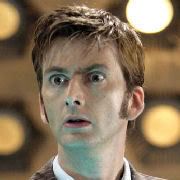
But Tennant is an interesting case; he started out as a stage actor, and returned from the world of TV. This is what makes Miller's dismissal of his Hamlet so unfair. Miller doesn't give any credit to the fact that Tennant isn't just a famous face; he's a very talented and engaging actor, whose Hamlet may not have been ground-breaking but was exactly what the RSC needed to boost ticket sales and energise the Company after their gruelling Complete Works Season.
Tennant's sometime screen partner John Barrowman is another star name who is used to reinvigorate theatre sales; his star turns have been the been the main draw in the pantos at the Birmingham Hippodrome for a couple of years now.
Lately, celebrity casting has been on the increase, with comedian Lenny Henry's pleasantly surprising turn as Othello for the Northern Broadsides covered in March's Hullfire, and Marc Warren starring in The Pillowman in Leicester. In March, Sir Ian McKellen and Patrick Stewart started touring Beckett's revolutionary Waiting for Godot.
 Most notably – though at the risk of over-emphasising London's place at the centre of the theatre world – there is a current season at London's Donmar Warehouse that features big names at affordable prices. Kenneth Branagh and Derek Jacobi have already won Critics' Circle Awards (Jacobi's Shakespearean Performance Award being held jointly with Tennant's Hamlet) for their roles in Ivanov and Twelfth Night, while Jude Law's Hamlet opens on May 29th. Judi Dench currently leads the cast of Madame de Sade, tickets for which can be bought for just £10. That's right: a West End show – with Dame Judi Dench – for as little as £10!
This is where celebrity casting can be invaluable, and more theatres should take note of what the Donmar is doing. This season is an excellent way of drawing in both younger audiences and older ones used to recognisable screen actors – by getting them to good, cheap theatre, the Donmar whets their appetite for similar work. If using quality star names is what it takes to keep theatres afloat, then people like Miller should have on objection – assuming they want to still have an industry to work in five years from now.
Tuesday, 10 March 2009
For he's a pretty good Othello (at the West Yorkshire Playhouse)
Barrie Rutter directs Lenny Henry as the title role in Shakespeare's Othello at the West Yorkshire Playhouse in Leeds.
It's not often you think that Shakespeare's tragic Othello might be being played as a comedy. But the Northern Broadsides have cast Dudley's comedian Lenny Henry as the Moor of Venice, and this idea takes a little getting used to.
In fairness to him, Henry is a pretty decent Othello, and a better actor than his TV work gives him credit for. He puts in a good turn as the black general in a white man's army, fighting the heathen Turk on behalf of the Venetian senate just after eloping with a senator's daughter. He shows us not only the stately nobleness of the honoured military genius, the boisterous glee of the newly-wedded lover, but also the shuddering confusion of the man tormented by his own jealous fears and the bursts of rage of the passionate man pushed too far. He is a restrained man in an alien world, with drinking games and loose morals. Deceit lies around every corner, and Othello is just that little bit too trusting to survive long in such a world.
Speaking of deceit, Conrad Nelson swaggers about the stage as an Iago keen to be everyone's confidential friend unless it serves his interests to be hostile to them. He pleads with Othello, his friendship and love for his boss drawing him to discreetly splash about his groundless insinuations, which then permeate and spread through Othello's mind. He's a bundle of feral energy, who somehow manages to cut a dashing figure in his burgundy military uniform.
The Northern Broadsides carry this tragedy off with customary panache, and in far better style than their Romeo and Juliet of last year. Their musicians are in fine form as ever, especially in a drinking game that looks like it may have first seen life in a panto routine somewhere. That's a compliment, by the way, to the stagecraft and handling of a complex set of exchanges. Naturally, the cast all use that 'northern voice' the Broadsides are so keen on. It's their hallmark, what they've become known for. That, and very little set. Othello has just a balcony, and a bed and torches for Desdemona's later scenes. What this means the Broadsides have to do is encourage the audience imagination. With their expansive black set, the Broadsides leave the words to set the scene, and the rest is up to us – turning the stage into a Cypriot street or the Venetian Senate chamber.
The northern voice thing is what makes it so interesting that Lenny Henry (Dudley's most famous son?) has been cast. I've nothing against his casting; he's good, surprisingly good for a comedian taking on a tricky tragic role – the fact that he is a black character written by a white man is sometimes painfully obvious. Henry's accent, though, is more difficult to place. His voice booms out, but where is it from?
It's a funny thing with criticism of classics like Bill Shakey's work, or even older things like the Greek tragedies, that we rarely seem to say much about the script itself (unless we're talking about a 'problem play', like The Taming of the Shrew or The Merchant of Venice). Some of these plays have become so enshrined in national consciousness that there's no point in mentioning things about script - the performance has become what matters. In some ways, that's a good thing; at least we aren't seeing them as only written documents, but as plays to be performed. But are they in danger of loosing their literary status? Is it allowed, or somehow a taboo, to criticse the Bard? Are we allowed to say - for example - that we'd like to see more of Othello's destructive jealousy before Iago has had chance to turn him against Desdemona? Is that so wrong? Or, can I praise the use of that fatal handkerchief at the end, that exposes Iago's villainy?
It's not often you think that Shakespeare's tragic Othello might be being played as a comedy. But the Northern Broadsides have cast Dudley's comedian Lenny Henry as the Moor of Venice, and this idea takes a little getting used to.
In fairness to him, Henry is a pretty decent Othello, and a better actor than his TV work gives him credit for. He puts in a good turn as the black general in a white man's army, fighting the heathen Turk on behalf of the Venetian senate just after eloping with a senator's daughter. He shows us not only the stately nobleness of the honoured military genius, the boisterous glee of the newly-wedded lover, but also the shuddering confusion of the man tormented by his own jealous fears and the bursts of rage of the passionate man pushed too far. He is a restrained man in an alien world, with drinking games and loose morals. Deceit lies around every corner, and Othello is just that little bit too trusting to survive long in such a world.
Speaking of deceit, Conrad Nelson swaggers about the stage as an Iago keen to be everyone's confidential friend unless it serves his interests to be hostile to them. He pleads with Othello, his friendship and love for his boss drawing him to discreetly splash about his groundless insinuations, which then permeate and spread through Othello's mind. He's a bundle of feral energy, who somehow manages to cut a dashing figure in his burgundy military uniform.
The Northern Broadsides carry this tragedy off with customary panache, and in far better style than their Romeo and Juliet of last year. Their musicians are in fine form as ever, especially in a drinking game that looks like it may have first seen life in a panto routine somewhere. That's a compliment, by the way, to the stagecraft and handling of a complex set of exchanges. Naturally, the cast all use that 'northern voice' the Broadsides are so keen on. It's their hallmark, what they've become known for. That, and very little set. Othello has just a balcony, and a bed and torches for Desdemona's later scenes. What this means the Broadsides have to do is encourage the audience imagination. With their expansive black set, the Broadsides leave the words to set the scene, and the rest is up to us – turning the stage into a Cypriot street or the Venetian Senate chamber.
The northern voice thing is what makes it so interesting that Lenny Henry (Dudley's most famous son?) has been cast. I've nothing against his casting; he's good, surprisingly good for a comedian taking on a tricky tragic role – the fact that he is a black character written by a white man is sometimes painfully obvious. Henry's accent, though, is more difficult to place. His voice booms out, but where is it from?
It's a funny thing with criticism of classics like Bill Shakey's work, or even older things like the Greek tragedies, that we rarely seem to say much about the script itself (unless we're talking about a 'problem play', like The Taming of the Shrew or The Merchant of Venice). Some of these plays have become so enshrined in national consciousness that there's no point in mentioning things about script - the performance has become what matters. In some ways, that's a good thing; at least we aren't seeing them as only written documents, but as plays to be performed. But are they in danger of loosing their literary status? Is it allowed, or somehow a taboo, to criticse the Bard? Are we allowed to say - for example - that we'd like to see more of Othello's destructive jealousy before Iago has had chance to turn him against Desdemona? Is that so wrong? Or, can I praise the use of that fatal handkerchief at the end, that exposes Iago's villainy?
Subscribe to:
Posts (Atom)