Showing posts with label Waiting for Godot. Show all posts

Sunday, 26 April 2009

Waiting for Godot at Newcastle's Theatre Royal - he didn't turn up

Newcastle has now been added to my list of 'Cities I like'. I already knew I liked the place from a night-time visit last year, but having seen it in the daylight today, I like it even more. It's just really nice. Mostly. There are some tragedies of architecture there, but they're alongside some genuinely beautiful buildings. Wandering around the streets, I realised my friend and I were in danger of becoming architecture critics - this is bad, as we've no idea what we're talking about.

We were there to see Patrick Stewart and Ian McKellen in Beckett's infamous Waiting for Godot, which I was wary of because I really wasn't a fan of the script. Here's my review:


Reading Waiting for Godot was – I admit – difficult. Not for nothing has Samuel Beckett's play been described as the one in which nothing happens...twice. Sean Mathias directs an eagerly-awaited production for the Theatre Royal Haymarket that tours this year – one that doesn't fail to live up to its promise.

When I read this seminal piece of theatre history a few months back, I suspected it was the sort of play that has to be seen to be properly understood. Having seen it, I still don't understand. But things are rather more clear. The comedy – gallows humour as it may at times be – is one thing to come out of seeing the thing staged.


But I'm still left with the impression that this play is a bit like candyfloss. You can pull bits away from the edges, working your way deeper and deeper, without actually gaining any extra value from it than what you had on the edges. Eventually – after stripping back the samey outside layer and the samey inner layers, you're left with a slightly baffling core, with which you can do nothing but look at and say “Er, yeah...well, that's it, then”.


But Mathias' production is stronger than my opinion of the writing implies. Leads Patrick Stewart and Ian McKellen were always going to be successes; the two classically trained actors pull off masterful performances as the vagabond double-act central to the non-action of Beckett's wandering script. Between them they handle a delicate mix of light-hearted buffoonery and existential glumness that is framed by Mathias' decision to make these tramps former thesps, continually re-meeting to wait for Godot. McKellen in particular draws laughter from his pathetic Estragon, seeming to be a child in an old man's body. Stewart's cleverer Vladimir, once his lines allow it, becomes a flustered child minder who is himself unsure of exactly what's going on.


But Simon Callow's Potzo is in danger of stealing the first act from under their noses. If the tramps are one-time actors, Potzo is a one-time circus ringmaster, brandishing his ineffectual whip at Ronald Pickup's hapless shell of a man, Lucky. Callow is all bombast and enforced bonhomie, exuberant in the power he wields. Pickup, meanwhile, loiters at the back until his frantic, manic, frenzied speech that culminates in his utter collapse.


Rather than focus on Beckett's image of humans being born 'astride the grave', ready to fall from cradle to death in a flash, this particular Waiting for Godot presents a humour not entirely expected in the bleakness. As well as that, there's the flicker of human nature that splutters into life every now and then. Our ability to wait and ponder is crucial, as is our tendency to miss opportunities we've spent ages waiting for. Beckett's limbo land makes these abstract things become very real. Language wanders back and forth, via half-remembered stories and events - all seeming to lead up to Potzo's final, reverberating, lines. But all the while, Beckett - as ever – is questioning our definitions of the world around us, what we believe to be true, and our very selves.


That Mathias' production makes this funny, charming yet also bleak is the key to its success. Tramps harking back to the old days of their (financial?) success feels horribly apt in the financial crisis of today.

Sunday, 5 April 2009

Celebrities and Star Power

An article on the use of celebrity casting, written for May edition of Hull University's Student Magazine, Hullfire. I thank a friend of mine for the idea of writing said article, which he mentioned to me at the West Yorkshire Playhouse while we were watching Lenny Henry in Othello.


In 1996 a young Scottish actor joined the Royal Shakespeare Company in Stratford-upon-Avon to play Touchstone in As You Like It. He already had a modest string of stage roles to his name, having performed with Scottish theatre company 7:84 – he'd even had a role in a BBC serial. He stayed with the world of theatre until 2006 (at London's Royal Court and National Theatre as well as the RSC), when he landed a larger TV role.


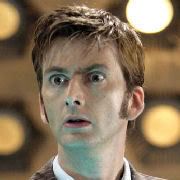
But when David Tennant returned to the RSC in 2008 to play Hamlet, some observers criticised his casting as merely an RSC headline-grabbing stunt. The criticism was that theatreland was becoming obsessed with stardom, and producers were no longer willing to take risks on shows that had no star power.


Respected director Sir Jonathan Miller found that interest in his Sheffield production of Chekhov's The Cherry Orchard faded when it was revealed that star Joanna Lumley couldn't perform in the West End run – without her, the run was cancelled. Miller – in a Times article of June 2008 – complained that producers (especially those in London) were attracted by 'the merely famous' of a show, and not the quality. For this reason, he believed, London audiences were missing some high-quality theatre which lacked star power. Certainly, as the West End becomes filled with screen stars wanting to have a go on a stage, and musicals that thrive on being stuffed with well-known hits, it's getting increasingly difficult for more traditional plays with lesser-known casts to get on in London.


The trouble is that theatre is increasingly costly, and no producer wants to risk an experimental project with a bunch of kids who've had a bit of success in a regional theatre when they could invest in a sure fire hit with one instantly recognisable face from TV. It takes massive audience numbers to justify West End runs these days, and theatres desperately need the pulling power offered by names like Tennant's.


But Tennant is an interesting case; he started out as a stage actor, and returned from the world of TV. This is what makes Miller's dismissal of his Hamlet so unfair. Miller doesn't give any credit to the fact that Tennant isn't just a famous face; he's a very talented and engaging actor, whose Hamlet may not have been ground-breaking but was exactly what the RSC needed to boost ticket sales and energise the Company after their gruelling Complete Works Season.
Tennant's sometime screen partner John Barrowman is another star name who is used to reinvigorate theatre sales; his star turns have been the been the main draw in the pantos at the Birmingham Hippodrome for a couple of years now.


Lately, celebrity casting has been on the increase, with comedian Lenny Henry's pleasantly surprising turn as Othello for the Northern Broadsides covered in March's Hullfire, and Marc Warren starring in The Pillowman in Leicester. In March, Sir Ian McKellen and Patrick Stewart started touring Beckett's revolutionary Waiting for Godot.


Most notably – though at the risk of over-emphasising London's place at the centre of the theatre world – there is a current season at London's Donmar Warehouse that features big names at affordable prices. Kenneth Branagh and Derek Jacobi have already won Critics' Circle Awards (Jacobi's Shakespearean Performance Award being held jointly with Tennant's Hamlet) for their roles in Ivanov and Twelfth Night, while Jude Law's Hamlet opens on May 29th. Judi Dench currently leads the cast of Madame de Sade, tickets for which can be bought for just £10. That's right: a West End show – with Dame Judi Dench – for as little as £10!


This is where celebrity casting can be invaluable, and more theatres should take note of what the Donmar is doing. This season is an excellent way of drawing in both younger audiences and older ones used to recognisable screen actors – by getting them to good, cheap theatre, the Donmar whets their appetite for similar work. If using quality star names is what it takes to keep theatres afloat, then people like Miller should have on objection – assuming they want to still have an industry to work in five years from now.